

Introduction
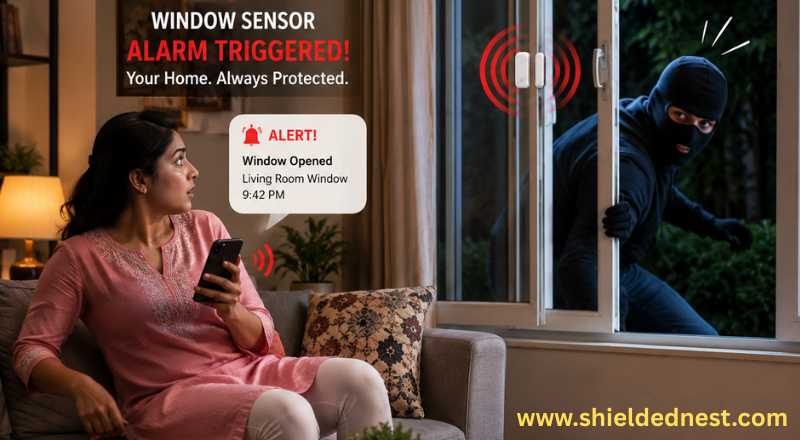
In India, most break-ins happen through an unlocked door or a window that someone forgot to close. It's rarely a broken lock or a smashed pane.
It's the small stuff we skip when we are in a hurry. Like leaving a balcony window open while you run down to buy groceries, opening the main door and visiting the neighborhood, forgetting to close the door, etc.
That's what a door and window sensor is built to help. Door sensors are a beautiful way to protect your home, relatively it is cheap to afford and very easy to install. It's a small and cheap next to a full CCTV setup, and it tells you the moment when something opens that shouldn't.
This guide covers how these sensors work, the types you can buy in India, the best options available right now, and how to install and maintain them this for your home security.
What are door and window sensors?
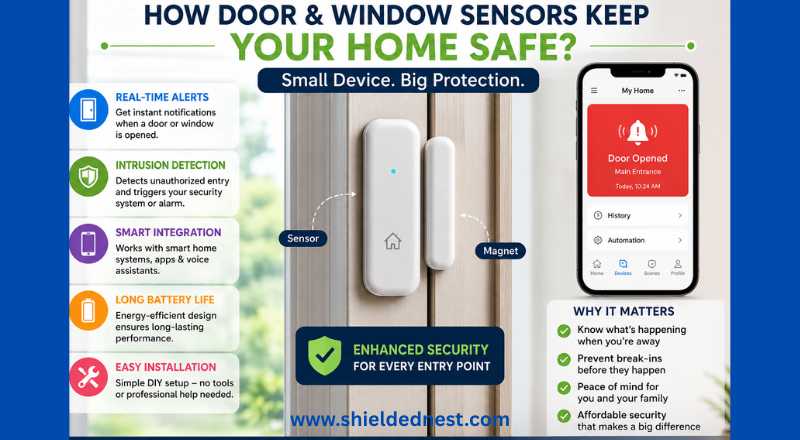
A door or window sensor is a small two-part device. One part sits on the frame, the other on the door or window itself.
When the two parts separate, because someone's opened it, the sensor fires a signal to your phone or hub.
Door & window sensors: the basic idea
Think of it like a tripwire, minus the wire. No cameras, no wiring headaches. Just a simple open-or-closed check running silently in the background until it's needed.
How do door and window sensors work?
Every sensor runs on the same basic idea: spot a gap, send an alert. What changes from one sensor to the next is the method behind that detection.
How contact sensors work
Most sensors use a magnet and a switch. The switch sits on the frame, and the magnet sits on the door.
As long as the magnet stays close to the switch, the circuit stays closed, and nothing happens. The moment the door opens, the magnet pulls away, the circuit breaks, and the sensor fires an alert.
It's a simple bit of physics doing a big job.
Types of door and window sensors
Not every sensor talks to your phone the same way. Here's what you'll actually find in India:
Wi-Fi sensors: Connect straight to your home Wi-Fi, no hub needed. They tend to consume more battery and lean on your router harder.
Zigbee/RF sensors: Need a separate hub (like the Qubo camera hub), but usually beat Wi-Fi models on battery life and range.
Standalone alarm sensors: No app, no fuss. They just scream a siren when triggered. Good for a tight budget.
Bluetooth sensors: Short range. Fine for a single room or a small flat, not much beyond that.
Can you use door sensors on windows?
Yes. Despite the name, most "door sensors" work exactly the same way on windows.
As long as the two halves sit close together when the window's shut, you're fine, whether it's a sliding window, a casement window, or the grill-style windows common in Indian homes. Just check the adhesive or screws suit your frame material before you buy.
Door and window sensors for home security
On their own, these sensors give you a solid first layer of protection. Pair one with a CCTV camera or a smart lock, and it becomes part of a real setup.
A lot of Indian homeowners use them as an early-warning system. The sensor fires the alert, the camera captures what's happening, and you get both the notification and the proof in one shot.
Beyond security: other uses for door sensors
Security isn't the only reason people buy these. Some households want to know the moment a child's bedroom door opens at night, or when a shop's back entrance gets used after working hours.
Others just want to skip the walk across the house to check if the fridge or a cupboard was left open.
Door sensors as smart triggers
Already have smart lights or plugs? A door sensor can trigger them automatically.
Open the front door, and the hallway light switches on by itself. Open a window, and the fan switches off. Small comfort, but it adds up.
Advantages and disadvantages of door sensors
Advantages:
•Cheaper than a full CCTV system
•Easy to install, no technician needed
•Works well alongside cameras and alarms
•Useful for security and everyday convenience
•Small and easy to miss, in a good way
Disadvantages:
•No video, just a yes-or-no on whether something opened
•Battery needs the occasional swap
•Wi-Fi models can act up if your network's shaky
•Some models need a hub, which adds to the setup cost
What is the best door sensor? Key buying criteria
There's no single "best" sensor for everyone. It really depends on the structure of your home and your budget.
The following are worth checking before you make any purchase:
• Range: matters more in big-sized homes, or if the hub sits far from the sensor
• Battery life: Go for at least 6-12 months per battery or charge
•App reliability: Always, a badly maintained app is a common problem found. Check for the recent reviews.
•STQC compliance: since April 2026, India's MeitY mandate requires STQC certification for many connected security devices, so better confirm this before you buy.
•Compatibility: make sure it works with any camera or hub you already own
Best door and window sensors in India (2026)
Here are 5 sensors worth a look, based on what's genuinely available to Indian buyers right now.
1. Qubo Smart Door/Window Sensor.
Works with the Qubo Smart Indoor Camera over Zigbee. A solid pick if you're already in the Qubo ecosystem, with decent indoor range and a simple app.
2. Mi (Xiaomi) Window and Door Sensor.
Part of the Mi Home ecosystem. Compact and reliable, and a good fit if you already run other Mi smart home gear.
3. EZVIZ Door/Window Sensor.
Pairs with EZVIZ's alarm hub and cameras. Known for longer battery life and decent build quality, though it needs the EZVIZ hub to work fully.
4. Generic Tuya Wi-Fi Door Sensor.
No hub required. Runs through the Tuya or Smart Life app, and supports Alexa and Google Assistant. A budget pick if you don't want to invest in a hub.
5. Standalone battery alarm sensor.
No app, no hub, just a loud local siren. Best for a single door or a low-budget setup where a phone alert isn't the priority.Check current pricing and stock on Amazon India before you publish any links. Availability and prices shift often.
Comparison table of 5 available products
Installation guide
Installing a door or window sensor is a DIY job for most people. Peel the adhesive backing, line up the two parts on the frame and the door, and press firmly for a few seconds.
Most sensors ship with an app that walks you through pairing in under 5 minutes.
Where to place door sensors
Keep the two halves close together, within a few millimetres, when the door or window is shut. Keep metal surfaces away from the sensor; metal can throw off the magnet.
For doors, mount it near the top or the handle side, not the hinge side. The gap stays smaller and more consistent there.
Door sensor maintenance
These devices barely need any upkeep. Check the battery indicator in the app every couple of months, and swap batteries before they die; most apps warn you ahead of time.
Wipe the sensor down now and then to keep dust off the adhesive strip, especially if you're in a dusty or coastal area.
Choosing the right door sensor for your home
Already own a camera or hub from a specific brand? Stick with that ecosystem. It saves you money and setup time.
Starting fresh? A Wi-Fi sensor without a hub is the simplest way in. And if the budget's tight, a standalone alarm sensor still does the core job: it tells you when a door opens that shouldn't.
Frequently Asked Questions (FAQ)
Conclusion
A door or window sensor won't replace a full security system. However, it's one of the most affordable and straightforward ways to close a real gap in your home's protection.
Pick a hub-based sensor tied to your existing camera setup, or go with a simple standalone alarm. Either way, the goal stays the same: know the moment something opens that shouldn't.
Start with your most vulnerable entry point, and build out from there.
