
Introduction
What Is a Glass Break Detector?
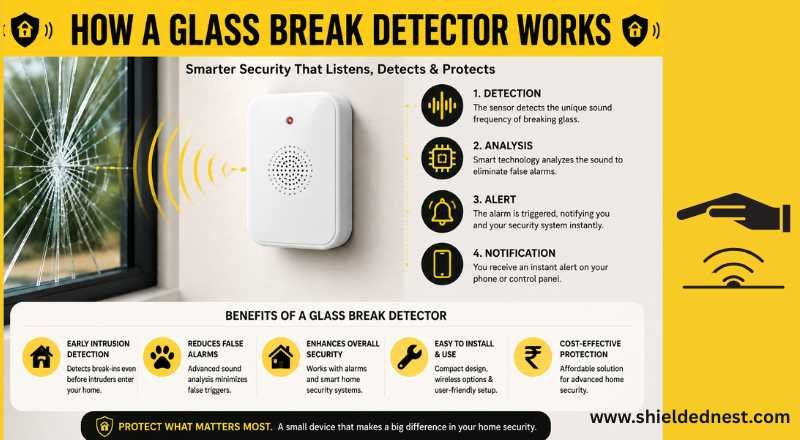
A glass break detector is a security device that listens the sound or feels the vibration of breaking of glass, like in windows, doors, or glass panels.
When it senses that glass has shattered, it sends a signal to your home security system, smart hub, or alarm panel.
This can make the system to :
• Sound an alarm
• Send a message to your phone
• Start the recording on security cameras
• Notify a monitoring center
• Turn on lights or other connected devices
Unlike motion detectors that react after someone enters inside but the glass break sensors act at the moment glass breaks. They help you catch the break-in attempts as early as possible.
In simple term, A glass break detector is a security device that picks up the sound or vibration from the shake of breaking glass and triggers an alarm or warning you of a possible break-in.
How Do Glass Break Detectors Keep Your Home Safe?
Today’s modern glass break detectors use smart technology to distinguish the difference between breaking glass and common sounds produced at home.
When a glass breaks, it makes two kinds of sounds in order:
1. A low-frequency impact sound
2. A high-frequency glass-shattering sound
The detector waits for both sounds in the right sequence before triggering any alarm.
Example
Say someone tries to break a front door at night time.
Without a glass break detector
• The break-in might not be noticed immediately.
• Motion sensors only react after a person gets inside.
With a glass break detector
• The alarm gets trigger immediately after the glass breaks.
• Homeowners get alerts instantly without delay.
• The intruder might run away before entering.
This fast warning makes glass break detectors a smart addition to any home security setup.
What Is the Maximum Range of a Glass Break Detector?
The range depends on the type and brand of sensor.
Most acoustic sensors can protect several windows in one room from a single spot.
Tips for Installation
For best results:
• Put the sensor on walls or ceilings, pointed toward the glass.
• Don’t hide it behind curtains.
• Keep it away from speakers or noisy devices.
• Follow the user manual for mounting distance details.
Why Glass Break Detection Is Important for Home Security
Many homes use door sensors and cameras. But windows are often weak spots for break-ins.
Key Benefits
· Faster Alert, the alarm starts the moment glass breaks, not after someone enters.
· Covers More Area
· One acoustic sensor can protect multiple windows in a room.
· Extra Safety for Ground floor Windows, Burglars often target ground-floor windows.
Glass break sensors connect with:
• Security cameras
• Motion sensors
• Door alarms
• Smart alarms
• Home automation
• Ideal for Big Glass Surfaces
New Indian homes now have more large glass features like:
• French windows
• Balcony doors
• Patio entrances
• Large living room windows
These spaces gain strong protection from glass break detection.
How Does a Glass Break Detector Work?
Different technologies rely on different methods to detect glass breakage.
Acoustic Detection
These type of detectors monitor for the distinct sound produced when the glass shatter. By recognizing the specific frequency and pattern of breaking glass, they can trigger an alert.
Uses:
•One sensor can protect multiple windows
• Simple installation
• No direct attachment to glass surfaces
Best for:
• Living spaces Office space
• Bedrooms
• Retail commercial settings
Shock Detection
This method employs sensors that are sensitive to physical vibrations that travel through glass when it is struck or broken.
Benefits:
• Specific detection of target pane
• Less false alarms from environmental noise
Ideal for:
• Separate windows
• Glass entrance doors
• Showcases and display units
Dual Technology Detection
These systems use sound monitoring and vibration sensing combined to verify a break event.
Uses:
• Increased detection reliability through cross-verification
• Decreases false alarms
Best suited for:
• High security facilities
• High quality home security systems
Types of Glass Break Detectors
Having knowing about the different options available can surely, help you to select the most suitable system for your needs.
1. Acoustic Glass Break Detectors
These type of detectors are commonly used in home security setups, these devices detect the sound of breaking glass before giving alerts.
Advantages:
· It can monitor multiple windows from a single unit
· It is simple and fast to install
· Generally affordable
Disadvantages:
· Must be positioned correctly for best performance
· May be less reliable in the areas where high background noise present
2. Shock Glass Break Detectors
These types are attached directly to individual glass panes.
Advantages:
· Highly accurate in detecting actual glass vibration
· Less influenced by ambient sounds in the room
Drawbacks:
· Each window must have its own sensor, it increases the setup effort
3. Wireless Glass Break Detectors
Frequently found in smart homes and self-installed home security systems.
Advantages:
· Reduces the need for cables for connections
· The setup process is easy
· Integrates well with smart home security platforms
Drawbacks:
· Requires regular battery check ups and replacements
4. Wired Glass Break Detectors
Always suitable for commercial applications.
Advantages:
·Offers a dependable, continuous connection
·No need for battery back ups
Drawbacks:
·Installation is more involved due to wiring requirements
Are Glass-Break Detectors Effective?
Yes. Good quality glass break detectors perform reliably when it installed correctly.
However, their performance is influenced by several factors:
· The quality of the sensor
· Placement within the specified space
· The characteristics of the glass
· Background noise levels
· Appropriate sensitivity calibration
Real-World Performance
In real security solutions these detectors improve response times and add a valuable layer of defense to work alongside cameras and motion detectors.
They deliver the best results when integrated with:
· Video surveillance systems
· Door and window contact sensors
· Smart notification features
· Loud warning alarms
Relying only on any one security device is not recommended at all, having layered protection is more effective.
What Triggers a Glass-Break Alarm?
While today’s glass-break detectors are built to minimize false alarms, some specific sounds can still set them off under certain conditions.
Common Causes
· Genuine instances of glass being shattered
· Large glass items accidentally dropped down
· Very loud impacts occurring close to windows
· Construction work involving heavy tools or hammering
· Loud audio playback containing frequencies similar to breaking glass
Widespread Misconceptions
Common Causes
· Genuine instances of glass being shattered
· Large glass items accidentally dropped down
· Very loud impacts occurring close to windows
· Construction work involving heavy tools or hammering
· Loud audio playback containing frequencies similar to breaking glass
There’s a common belief that the following are routinely activate these alarms:
· Barking dogs
· Thunder from storms
· Regular talking
· Sounds from a TV
· Noise from vacuum cleaners
Remember in reality, most up-to-date detectors are engineered to distinguish and disregard such routine household noises.
Minimizing Unwanted Alarms
· Ensure proper placement and installation of sensors
· Tune sensitivity levels according to the environment
· Opt for dual-sensor systems that cross-verify triggers
· Follow the manufacturer’s recommendations for installation and setup
How to Test an Acoustic Glass-Break Sensor
Testing makes sure your sensor still works with efficiency.
Steps to Follow
1. Turn on "test mode" option in the alarm system.
2. Use a tool provided by the manufacturer, if you have one.
3. Make sure the sensor picks up the test sound clearly.
4. See that if it sends an alert as expected in time.
5. Ensure it communicates properly to the main control panel or smart hub.
Important
Don’t break real glass for testing. There are some special tools available which can create the right sound frequencies then emitted during real glass break. They let you test your device safely.
Testing Frequency - Experts suggestion:
• Once in a month
• After any home repairs
• After rearranging furniture
• After changing the sensor locations
Can Glass Break Sensors Hear Through Walls?
Most glass break detectors only work in the same room. They usually can’t hear breaking glass through solid walls.
What affects their performance?
· Type of wall
· Shape of the room
· Where the sensor is placed
· Materials that block sound waves
Tip:
Put the detector in the same room as the windows you want to protect. This gives the best choice for catching broken glass early.
Top Glass Break Detectors in India (2026)
Are you looking for a glass break detector in India? Stick to trusted security brands that offer reliable alarm systems.
Top Choices in India
· Honeywell glass break sensors
· Bosch security detectors
· Hikvision alarm sensors
· Ajax wireless models
· Yale smart home devices
Most of the people in India, check Glass Break Detector listings on Amazon India. It helps them read user reviews and confirm device compatibility before buying.
What to Check Before Buying?
Wireless Connection – Simple setup, no extra wiring
Dual Detection – Fewer mistakes, better performance
Mobile App Support – Get alerts on your phone instantly
Adjustable Settings – Reduce false alarms
Long-Life Battery – Less frequent replacements
Works with Alarm systems – Connects easily to your system
Tips for Indian Homes
Pick a detector based on:
· How many windows you have
· Your home type – apartment or house
· Wired or wireless setup
· Current security system
· Smart home requirements
For most of the homes in India, a wireless sound-based detector linked to a smart alarm gives strong protection and easy use.
Common Mistakes to Avoid
· Placing the Sensor Too Far from Windows, If it’s too far, it might not be able to detect breaks properly.
· Not Considering Room Sound Features
· Thick curtains or soft materials can block sound and reduce effectiveness
.· Relying Only on One Type of Security
· Glass break sensors should work with other devices, not stand alone.
· Failing to Test It Regularly
· An untested sensor could stop working without your knowledge.
· Picking the Cheapest Option
· Better performance matter more than a lower price.
Frequently Asked Questions
Conclusion
A glass break detector is a smart upgrade for any kind of home security system. It senses fast when glass breaks, letting you act fast during a break-in attempt.
No matter if you pick an acoustic, shock, wired, or wireless type, correct location and routine checks are the key to make it work well. In Indian homes with big windows, balcony doors, or ground-level entries, this device adds extra safety that cameras or motion sensors might miss.
Before buying one, please consider your home’s design, count the number of windows you want to cover, and check if it works with your current alarm or smart home security setup. A thoughtful plan can boost your home’s security and help you feel safer all the time.
